
There’s a reason spring cleaning outlasts every organising trend that comes and goes. It isn’t really about the dust. It’s about what happens when winter loosens its grip and something in us wants to shed what we’ve been carrying — the extra sweaters, the stagnant air, the mental clutter we didn’t notice piling up in the dark months.
At Nightwolf’s Den, we like to hold both truths at once: a clean home is a practical thing, and it’s also a sacred one. This guide blends the two — grounded, sustainable cleaning habits alongside simple rituals to clear the energy of your space. No need to choose between the practical and the mystical. Spring has room for both.
Why Spring Cleaning Is More Than a Chore
Every culture has some version of seasonal clearing — Nowruz’s khaneh tekani, Passover’s search for chametz, the Feng Shui tradition of clutter clearing to let energy, or chi, move freely again. The common thread is intention. You’re not just tidying; you’re making room for what’s next.
Physical clutter and stagnant energy tend to build together. A junk drawer left too long, a closet you haven’t opened all winter — these aren’t just messes, they’re small weights. Clearing them is one of the simplest ways to feel lighter without changing anything else in your life.
Start With Intention, Not a To-Do List
Before you touch a single sponge, pause. Ask yourself what you actually want this season to feel like. Spacious? Calm? Creative? Let that answer guide which rooms you tackle first and how you want to feel when you’re done.
A simple way to open the process:
- Sit for a moment in the space you’re about to clean.
- Name what you’re ready to release — physically and otherwise.
- Set a one-sentence intention, spoken aloud or written down, like “I make room for what serves me now.”
This isn’t about performing a ritual perfectly. It’s about starting with awareness instead of autopilot.

Declutter With Discernment
Skip the all-or-nothing purge. Move room by room, and for each item ask two questions: Does this still serve me? and Would I choose this again today? If the answer is no to both, it’s probably ready to go.
A few sustainable ways to let things go without adding to the landfill:
- Donate gently used items to local shelters, schools, or op shops.
- Swap clothing and household goods with friends or through a local swap group.
- Compost natural fibres, dried flowers, and anything biodegradable.
- Re-purpose what you can — old t-shirts become cleaning rags, jars become storage.
- Recycle responsibly, checking your municipality’s guidelines for anything electronic or hazardous.
Letting go with care, rather than urgency, is its own kind of practice. It keeps the process from feeling like punishment and more like a gift you’re giving your future self.
Clean With Ingredients You Trust
Conventional cleaners often trade convenience for a long list of synthetic chemicals — many of which end up in waterways or lingering indoor air. A gentler approach costs less and works nearly as well for most household jobs.
A few staples worth keeping on hand:
- White vinegar — cuts grease, disinfects, and clears mineral build-up.
- Baking soda — deodorises and gently scrubs without scratching.
- Castile soap — a plant-based base for nearly any all-purpose spray.
- Essential oils (lemon, tea tree, lavender) — add antibacterial properties and scent without synthetic fragrance.
- Reusable cloths — swap paper towels for washable cotton or microfiber.
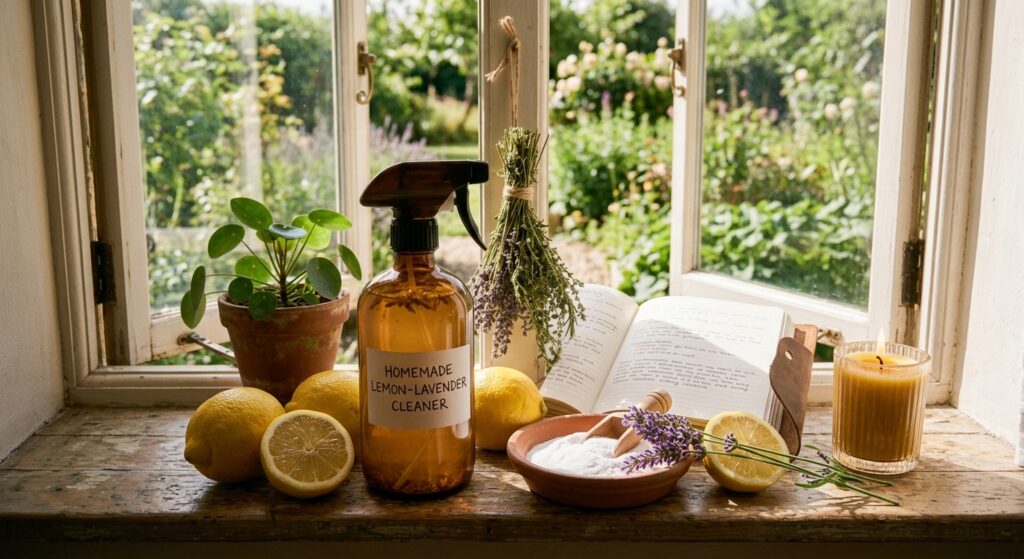
A simple all-purpose spray: combine one part white vinegar, one part water, a few drops of castile soap, and 10–15 drops of your favourite essential oil in a glass spray bottle.
Clear the Energy, Room by Room
Once the physical clutter is gone and the surfaces are clean, many traditions turn to clearing what can’t be seen. You don’t need an elaborate practice — a few minutes of intention can shift how a room feels.
Simple ways to clear a space:
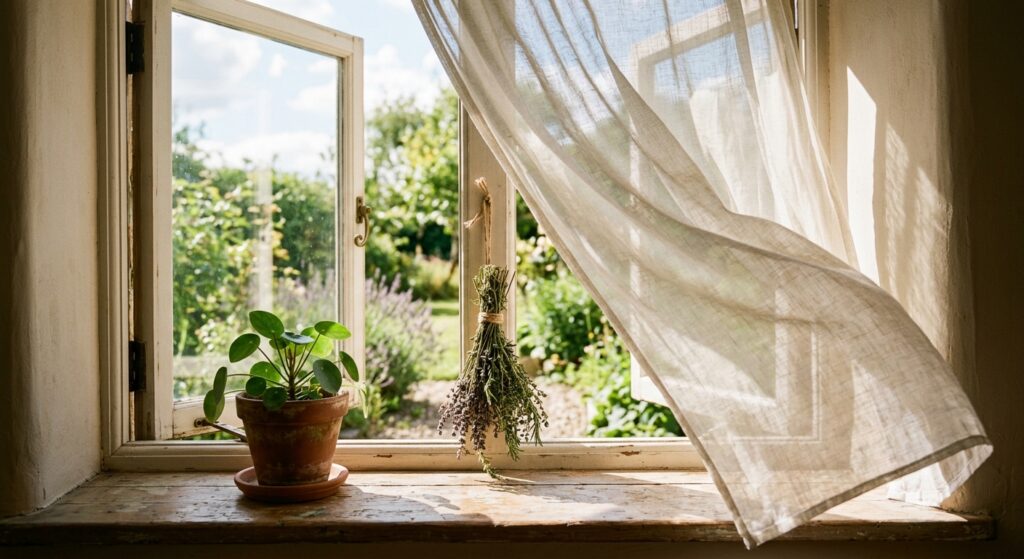
- Open the windows. Even five minutes of fresh air moving through a room resets it.
- Sound. Clap, ring a bell, or play a singing bowl through each corner of the room to break up stagnant energy.
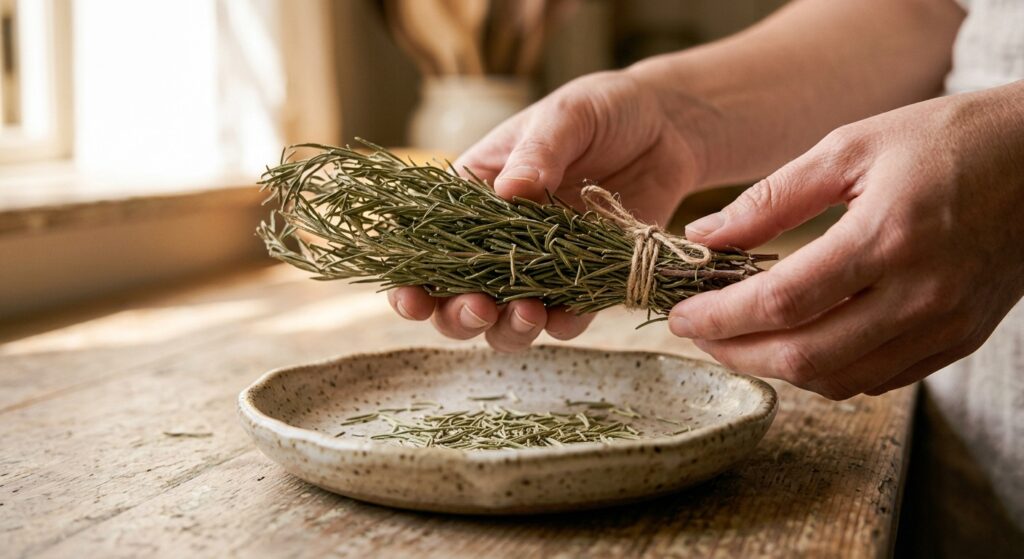
- Herb smoke. If you work with smudging, cedar, rosemary, or palo santo are gentler alternatives to white sage, which is over-harvested in the wild. Always crack a window when burning herbs indoors.
- Salt. A small bowl of sea salt left in a corner for a day or two is a quiet, low-effort way to absorb heaviness.
- Close with gratitude. Before you leave the room, take a breath and acknowledge the shift — even a simple “thank you” to the space.
None of this requires belief in anything specific. Even approached sceptically, the physical acts of airing out a room and moving through it with attention tend to change how it feels to be in.
Let the Season Set the Pace
Spring cleaning doesn’t have to happen in one exhausting weekend. Some of the most lasting versions of this practice unfold slowly — one drawer, one shelf, one ritual at a time, over several weeks. The goal isn’t a perfectly staged home. It’s a space that reflects who you’re becoming as the season changes.
However you approach it, let the process be as honest as the space you’re clearing. A little sunlight, a little intention, and a little willingness to let go go a long way.